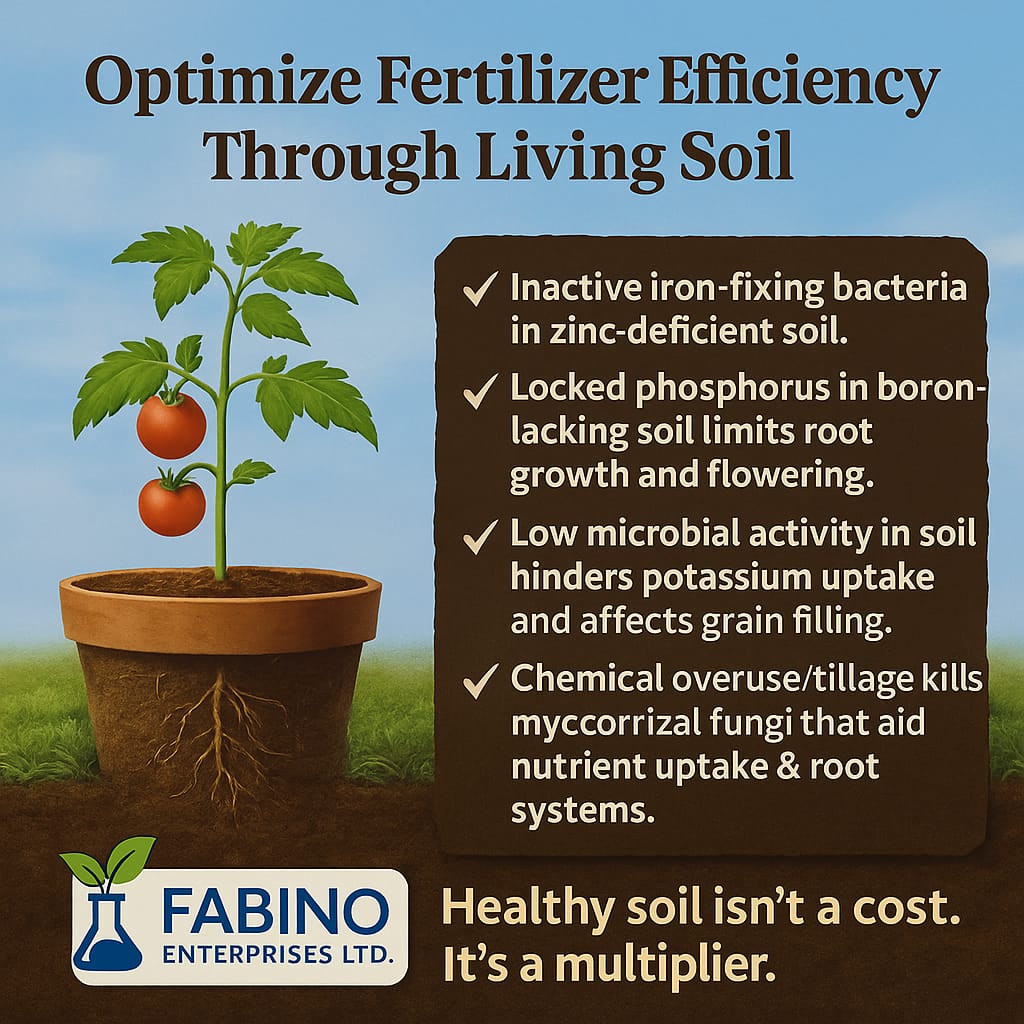
Across the world, agriculture is at a turning point. Decades of excessive chemical fertilizer use have led to soil degradation, declining crop productivity, groundwater contamination, and rising greenhouse gas emissions. To ensure long-term food security, nations are urgently shifting towards sustainable and regenerative farming practices, and bio-fertilizers have emerged as a key solution.
Bio-fertilizers—made from beneficial microorganisms—naturally enhance soil fertility, improve nutrient uptake, and restore the biological health of farmland. Unlike chemical fertilizers, they do not damage soil structure, leave harmful residues, or require heavy subsidies. Instead, they promote balanced plant growth, increase organic carbon, and support healthier ecosystems.
Governments worldwide are pushing for sustainable agriculture because the future demands it:
• Climate change pressures require farming methods that reduce emissions and build resilient soils.
• Global food demand is rising, and only healthy, fertile land can sustain higher productivity.
• Consumer awareness is shifting toward safe, chemical-free, and organic food.
• Environmental protection is now a global priority, with countries adopting policies to reduce chemical inputs.
In this context, bio-fertilizers are not just an alternative—they are a necessity. They represent the path toward sustainable growth, healthier food systems, and a cleaner, greener planet for generations to come.